
Direct answer
SN duplex and SN-MT use different connection structures: individual ceramic ferrules for duplex SN and a compact multifiber ferrule for SN-MT. Retain complete family and part numbers, then check each adapter side, fiber count, mapping and installation space. The shared SN name does not establish mating compatibility.
Put ferrule structure in the interface schedule
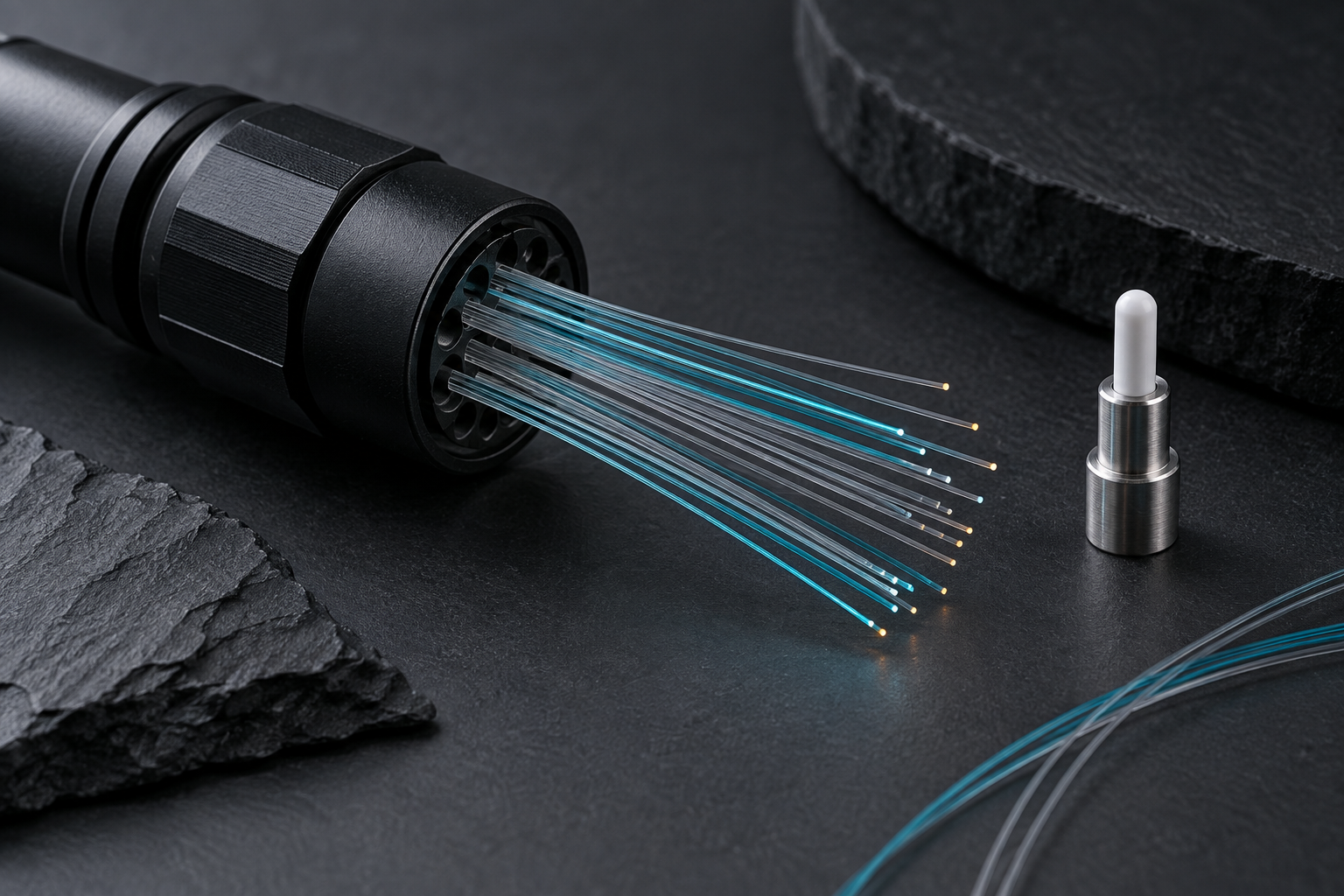
SENKO's SN application note illustrates the 1.25 mm ceramic ferrules used in duplex SN. Its SN-MT family page describes a compact multifiber ferrule and a single-row 16-fiber example.
Use this guide for high-density panels, behind-wall connections and OEM interface reviews. It extends the existing VSFF duplex overview with SN-MT mating questions. Connector appearance does not establish support for a particular Ethernet rate.
| Object | Establish | Do not infer |
|---|---|---|
| SN duplex | Duplex port and assembly part | Direct SN-MT mating |
| SN-MT | Ferrule version and fiber-position drawing | One fiber count for every version |
| Adapter | Approved parts for each side | Identical front/rear interfaces |
| Optical module | Formal module and optical requirements | Rate from connector name |
| Installation | Boot, routing and access space | Easy maintenance from small size |
Review both adapter sides
The current SENKO portfolio distinguishes standard, Junior and Mini versions and describes front-side and behind-wall mating combinations. The Mini product page provides a separate component reference.
Label front-panel components, adapters and rear assemblies individually, with parts and revisions. If a bill of materials only says SN-MT adapter, obtain the two-sided definition before checking the panel.
Do not extend a family compatibility statement to visually similar third-party components. A proposed substitute needs its own interface and mating evidence; retain an unverified combination as an open item.
Separate ports from fibers
The portfolio includes one-port/16-fiber and four-port/64-fiber adapter examples. Physical port counts do not define switch services or breakout rates.
Prepare a fiber-position schedule for each physical port and correlate it with module channels. Mark spare or unused positions explicitly. Equal total fiber count alone cannot establish matching connectivity.
Furukawa's March 2022 development announcement provides historical context for the multifiber construction. Its sample plans are not evidence of current availability, lead time or ARRANEX supply.
Review density alongside service access
Keep inside/outside panel drawings in the review package. Check routing, adjacent hardware, access paths and protection of disconnected ends. These are proposed review steps, not a claim of field qualification for a component.
Record mating, channel mapping, optical results and maintenance accessories separately at sample review. Verify accessory applicability to the actual interface and end face instead of carrying existing MPO or duplex tools into a new configuration.
| Deliverable | Include | Purpose |
|---|---|---|
| Mating schedule | Connector and both adapter-side parts | Defined combination |
| Layout | Panel, rear clearance and route | Installation/access |
| Channel table | Ports, fiber positions and far ends | Avoid mapping gaps |
| Sample record | Revisions, combination and method | Verification scope |
| Accessories | Applicable inspection/cleaning/protection parts | Avoid tool mismatch |
Procurement FAQ
- Can duplex SN mate directly with SN-MT? Treat them as different interfaces and obtain formal mating documentation.
- Are Junior and Mini interchangeable? Check adapter sides and layout.
- Does a four-port adapter mean four services? Map physical ports to services separately.
- Is all SN-MT fixed at 16 fibers? Do not generalize a 16-fiber example to the whole family.
- What starts the RFQ? Module parts, mating schedule, panel drawing and fiber mapping.
Related products and reading
- Custom interconnect requirements
- Harness configurations
- VSFF duplex selection
- MT ferrules and complete connectors
Related pages support configuration and verification review. Manufacturability, materials, performance and delivery scope depend on mutually confirmed specifications.
Contact an engineer with interface drawings and validation requirements
Sources and review date
Reviewed on 2026-10-21. Source publication/update dates remain separate. Manufacturer examples explain technical points; procurement tables are editorial recommendations, not ARRANEX specifications, certifications or supply claims.
Sources checked: 2026-10-21